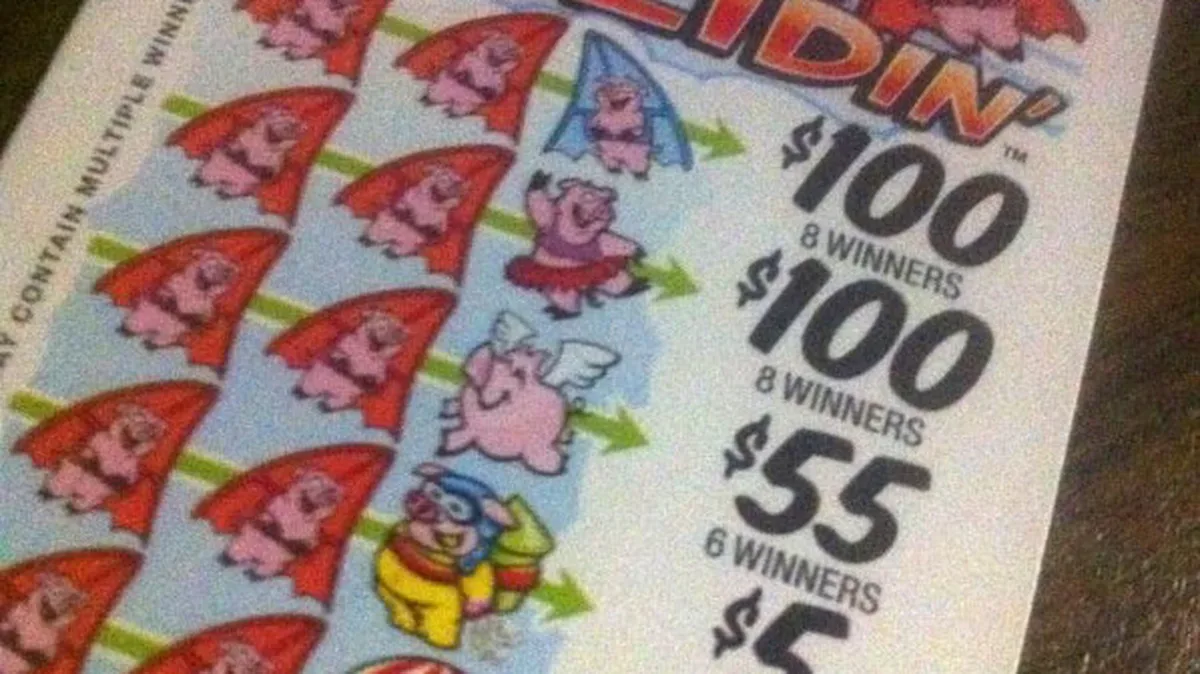
Break open tickets, also called pull-tabs or Nevada tickets, are sold in fixed deals with a set number of tickets and a set prize structure. Because every winner in the deal is printed in advance, the odds and the payout share can be worked out exactly. Approved Ontario deals return roughly 66% to 70% of sales as prizes.
Independent reviews · how we rateSome links are commercial · who pays us19+ (18+ in Alberta, Manitoba and Quebec)
What a break open ticket is
The AGCO's Chapter 7: Break Open Tickets defines them as "instant-win lottery tickets, commonly known as 'pull tab' or 'nevada' tickets": cardboard tickets with perforated cover window tabs. You pull the tabs and compare the symbols underneath with the prize table. Alberta's Pull Ticket Terms and Conditions describe the same product: "The game pay table appears on the front of each ticket", with sealed windows on the back.
Unlike a slot machine, nothing is drawn when you play. The AGLC terms say winners are determined only by the windows and pay tables, with no extraneous random selection. The result was fixed when the ticket was printed.
How a deal works
The AGCO uses a small set of defined terms that explain the whole game:
- Deal: "each separate series of break open tickets with the same serial number".
- Type: the number of tickets per deal, the ticket price and the total prize value per deal.
- Style: the graphics plus the prize structure.
- Prize structure: "the number and combination of winning tickets and prize amounts", approved by the Registrar.
- Box and dispenser: the chapter also defines the box tickets are packed in and the dispenser they are sold from.
The type matters more than the artwork. Two styles can look completely different on the counter yet belong to the same type, with the same ticket count, price and total prize value. Conversely, two deals that look alike may be different types with different payouts. The serial number on the ticket ties it to one deal, and every ticket with that serial number shares one prize pool.
A deal is a closed pool. If a deal has a fixed number of tickets and a fixed list of winners, then every ticket sold changes what is left. Big prizes already claimed are gone from that deal; unsold winners are still in it. Seal card games add a second-stage draw, and Ontario's rules (7.8.1(B)) require seal card prizes to be prominently displayed.
A published prize structure, broken down
Chapter 7 gives an example prize structure with 223 winning tickets worth $1,015 in total. It does not give a ticket price or the number of tickets in the deal, so the odds of winning cannot be calculated from it, but the shape of the prizes can.
| Prize | Winning tickets | Prize money | Share of winning tickets | Share of prize money |
|---|---|---|---|---|
| $300 | 1 | $300 | 0.4% | 29.6% |
| $100 | 4 | $400 | 1.8% | 39.4% |
| $50 | 1 | $50 | 0.4% | 4.9% |
| $25 | 2 | $50 | 0.9% | 4.9% |
| $1 | 215 | $215 | 96.4% | 21.2% |
| Total | 223 | $1,015 | 100% | 100% |
Two things stand out. First, 215 of the 223 winners, or 96.4%, are $1 prizes; on a $1 ticket most "wins" simply return the stake. Second, the top five tickets (one $300 and four $100) hold $700, or 69.0% of all prize money. Most buyers in a deal like this will never see one of those five.
Why the odds are knowable
Because the Registrar approves both the ticket count and the prize structure for each type, the numbers that matter are fixed before sale:
- Odds of any prize = winning tickets ÷ tickets in the deal.
- Odds of a specific prize = tickets carrying that prize ÷ tickets in the deal.
- Payout share = total prizes ÷ (ticket price × tickets in the deal).
The AGCO's Schedule of Approved Break Open Ticket Types, effective September 30, 2026, publishes the price, ticket count and total prizes for each type. Applying the third formula gives the payout share:
| Type | Price | Tickets per deal | Sales if sold out | Total prizes | Left after prizes | Payout share |
|---|---|---|---|---|---|---|
| BN2 | $0.25 | 2,940 | $735 | $488 | $247 | 66.4% |
| BN1 | $0.50 | 3,360 | $1,680 | $1,115 | $565 | 66.4% |
| BN4 | $1 | 2,520 | $2,520 | $1,675 | $845 | 66.5% |
| BN8 | $1 | 300 | $300 | $200 | $100 | 66.7% |
| BN26 | $1 | 16,800 | $16,800 | $11,440 | $5,360 | 68.1% |
| BN30 | $1 | 48,000 | $48,000 | $33,000 | $15,000 | 68.75% |
| BN31 | $1 | 2,700 | $2,700 | $1,890 | $810 | 70.0% |
| BN10 | $2 | 300 | $600 | $400 | $200 | 66.7% |
| SP25 | $2 | 8,400 | $16,800 | $11,440 | $5,360 | 68.1% |
| SG4 | $5 | 420 | $2,100 | $1,470 | $630 | 70.0% |
Read as an average across a full deal, every $1 spent returns about 66 to 70 cents in prizes. That is an average over the whole deal, not a promise to any one buyer: a player who buys ten tickets from a 2,520-ticket deal can easily get nothing back. For comparison with machine games, see how slot payout percentages are published.
Where the rest of the money goes
Under Ontario's Revenue Split Model, "net win" is gross wager minus prizes minus ticket cost, and "the charity and suppliers will split the resulting 'net win' with 50% going to each party". An AGCO news release of July 29, 2026 explains the switch:
- From July 29, 2026, new $0.50 and $1 tickets with counts over 5,000 can be licensed, and suppliers no longer submit graphics unless the Registrar asks.
- From September 30, 2026, all break open licensing moves to the Revenue Split Model; tickets ordered or invoiced before then stay under the old framework.
- Charities no longer report administrative expenses, seller commission or dispenser fees.
Who licenses break open tickets in each province
Break opens are charitable gaming. Criminal Code s.207(1)(b) allows a charitable or religious organization to run a lottery scheme under a licence issued by the province. Each province then sets its own system:
- Ontario: the Registrar licenses eligible organizations, including under a provincial break open licence (7.3.1(A)), and municipalities issue licences for locations within their boundaries (7.3.1(B)). Tickets are sold at bingo halls and charitable gaming sites; other locations must register as a seller under the Gaming Control Act, 1992. Sellers, their staff and hall executives may not buy. Only types and styles approved by the Registrar may be sold.
- Alberta: under the AGLC terms, buyers must be at least 18 to purchase, play or be awarded a prize (1.1.4), and a $5 licence fee per pull ticket unit is collected by the supplier (1.1.5). A change to tickets per unit or prize payouts requires a new "flair" (4.1.4 and 4.1.5). See the Alberta page.
- Manitoba: Manitoba Liquor & Lotteries, a provincial Crown corporation, is "the exclusive supplier of breakopen tickets and bingo paper in Manitoba". More on the Manitoba page.
Checklist before you buy
- Read the pay table on the front of the ticket and note the prize amounts and how many of each are in the deal.
- If the seller displays which big prizes have been claimed, check what is still in the deal; claimed top prizes cannot be won again.
- Divide winners by tickets in the deal if both are shown; that is your exact chance of any prize.
- Expect most wins to be the smallest prize, often just your stake back.
- Treat the 66% to 70% payout as the cost of supporting a charity, and set a spending limit before you start.
- If ticket buying stops being entertainment, see the responsible gambling page; in Ontario, ConnexOntario answers at 1-866-531-2600.
Frequently asked questions
What are the odds of winning on a break open ticket?
The exact odds equal the number of winning tickets divided by the number of tickets in the deal, both of which are fixed and approved before sale. In Ontario's published schedule of approved types, prizes add up to roughly 66% to 70% of the money taken if the whole deal sells, and most winning tickets in a typical prize structure pay the smallest prize.
Are break open tickets the same as pull-tabs or Nevada tickets?
Yes. The AGCO defines break open tickets as instant-win lottery tickets commonly known as pull tab or Nevada tickets. Alberta's AGLC calls them pull tickets. All are cardboard tickets with sealed windows that you open and compare with the pay table.
How old do you have to be to buy break open tickets?
It depends on the province. Alberta's AGLC terms say a person must be at least 18 to purchase, play or be awarded a prize on a pull ticket. Check your own province's charitable gaming rules for its minimum age.
Who gets the money that is not paid out in prizes?
Under Ontario's Revenue Split Model, which applies to all break open licensing from September 30, 2026, net win is the gross wager minus prizes and ticket cost, and it is split 50% to the charity and 50% to the suppliers.