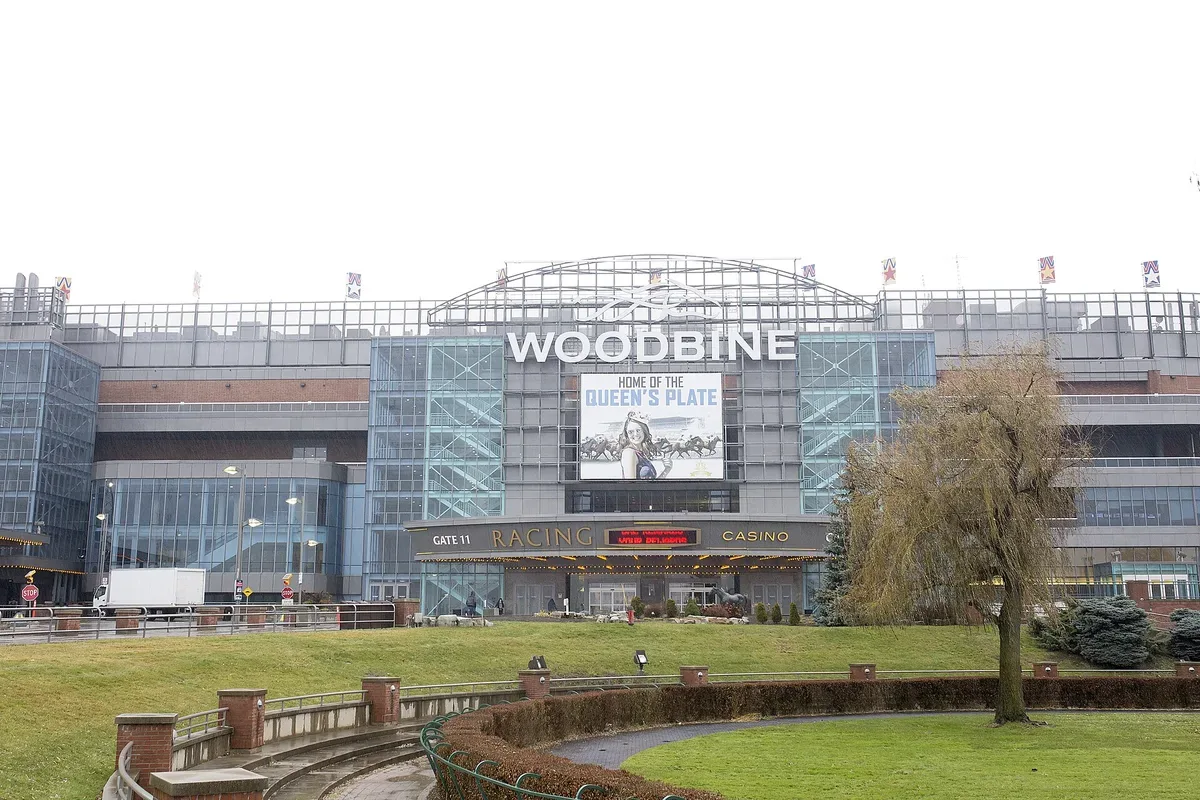
Betting on horse races in Canada is legal only as pari-mutuel betting under section 204 of the Criminal Code, supervised by the Canadian Pari-Mutuel Agency, part of Agriculture and Agri-Food Canada. Bets go into pools, the track takes a regulated percentage, a federal levy of 0.8 per cent is paid, and the rest is shared among winners.
Independent reviews · how we rateSome links are commercial · who pays us19+ (18+ in Alberta, Manitoba and Quebec)
Why race betting is a federal matter
Betting on horse races has its own provision in the Criminal Code. Section 204 of the Criminal Code exempts pari-mutuel betting on running, trotting or pacing races from the general gaming offences, but only on federal terms:
- Bets must be placed through a pari-mutuel system run by an association, on races at its racetrack or, under the Code's conditions, on races held elsewhere, including foreign races certified under subsection 204(8.1).
- Bets made at a betting theatre or by telecommunication, under the regulations, are deemed to be made at the racetrack (s.204(2)).
- The pari-mutuel system must be approved and supervised by an officer appointed by the Minister of Agriculture and Agri-Food (s.204(3)), who may stop betting where the rules are not followed (s.204(7)).
- Breaking these rules is an offence punishable on indictment by up to two years in prison or on summary conviction (s.204(10)).
Section 204(5) adds that nothing may be deducted from the amounts bet except as subsection (6) allows, and subsections (8) and (9) let the Minister make regulations on matters such as how odds are calculated, video patrol of races and drug testing of horses. That is why race betting sits under the agriculture department rather than with a provincial lottery corporation. Fixed-odds wagering on other sports is a separate subject, covered in the sports betting guide.
The Canadian Pari-Mutuel Agency
The federal supervisor is the Canadian Pari-Mutuel Agency (CPMA), a special operating agency of Agriculture and Agri-Food Canada. According to the agency, it issues permits to racetrack and betting theatre operators, audits their pari-mutuel operations, enforces the rules, and runs the Equine Drug Control Program, which tests horses after races.
The detailed rules are in the Pari-Mutuel Betting Supervision Regulations (SOR/91-365). Among other things, they require each association to publish, for every pool, the legal percentages and the breakage rules that apply (s.26(1)(l)). Before betting at a track or through its account wagering, that published notice is where the exact deductions are stated.
How a pari-mutuel pool works
In pari-mutuel betting, bettors do not play against a bookmaker. Everyone's money on one type of bet in one race goes into a pool, which the regulations define as the total amount bet on that type of bet. The calculation runs in a fixed order:
- The legal percentages are deducted. Under the regulations these are the association's percentage, any provincial deduction, and the payment to the Receiver General.
- Refunds, for example on scratched horses, are removed. Section 119(2) defines the net pool as total bets minus refunds minus the legal percentages.
- For a win pool, section 120(1) sets the price as the net pool divided by the amount bet to win on the winning horse.
- The price is rounded down under the published breakage rule. Section 204(6) of the Code allows the association to keep the odd cents over any multiple of five cents per dollar bet.
- Section 115(1) sets a minimum pay-out of $1.05 for each dollar bet, paid at the association's expense when the pool is too small, except on refunds.
An illustrative calculation
These numbers are hypothetical and do not describe a real race. Suppose a win pool of $10,000, a 15 per cent total of legal percentages, and $2,000 bet to win on the horse that wins. The net pool is $10,000 minus $1,500, or $8,500. Divided by $2,000, that is $4.25 for each $1 bet, so a $2 win ticket returns $8.50, including the stake. A higher takeout or more money on the winner lowers that price.
Takeout: the 35 per cent cap and real track rates
Section 102(1) of the regulations sets the maximum: an association may deduct no more than 35 per cent of a pool. The association can price on a gross or net basis (s.102(2)), may not take more than the percentage set in its permit (s.102(2.1)), and must give written notice to the CPMA's Executive Director before changing its percentages (s.102(3) to (5)).
Actual rates are well below the cap and differ by track and bet type. A 2020 comparison by Canadian Thoroughbred gave win takeout of 14.75 per cent at Century Mile in Alberta and 19 per cent at Assiniboia Downs in Manitoba. Rates for other bet types can differ from the win rate, so the posted notice for each pool is worth reading. Takeout works like a house edge: it is taken before winners are paid, whatever the result.
The federal levy
Section 204(4) of the Code requires a levy to the Receiver General of one-half of one per cent of each pool, or a greater fraction, up to one per cent, fixed by the Governor in Council. The current rate is in the Pari-Mutuel Payments Order (SI/83-72): "the fraction fixed is eight-tenths of one per cent", that is 0.8 per cent. Under section 101 of the supervision regulations, the association pays it within seven days of the invoice. It is one of the legal percentages taken from the pool before the net pool is calculated, not an extra charge on winning tickets.
The rate may change. The CPMA's forward regulatory plan, first listed on August 21, 2025, proposes raising the levy from 0.8 to 1.0 per cent to support oversight and the equine anti-doping program; it gives no date. The same plan proposes adding apomorphine and an arsenic limit to the list of prohibited substances.
Provincial racing commissions
The federal government controls the betting; provinces regulate the sport. In Ontario, the Alcohol and Gaming Commission of Ontario regulates horse racing under the Horse Racing Licence Act, 2015. It licenses racetracks, teletheatres and horse people, provides judges and stewards, and approves race dates, and it works with the CPMA, which oversees post-race equine drug testing. For other provinces, the provincial guides cover each province's gambling rules.
| Question | Who answers it |
|---|---|
| Is pari-mutuel betting allowed and on what terms? | Criminal Code s.204 (federal) |
| Who approves the betting system and audits pools? | Canadian Pari-Mutuel Agency |
| How much can be deducted from a pool? | SOR/91-365 s.102: 35 per cent maximum |
| What is the federal levy? | SI/83-72: 0.8 per cent |
| Who licenses tracks, horse people and race officials in Ontario? | AGCO |
| Who tests horses for drugs after races? | CPMA Equine Drug Control Program |
What to check before betting on a race
- Confirm the outlet is a racetrack, betting theatre or account wagering service run by a CPMA-permitted association.
- Read the posted legal percentages and breakage rule for the pool you plan to bet into.
- Remember that the final price is set when the pool closes, so displayed odds can move after you bet.
- Treat takeout as a cost of every bet and set a budget for the day before the first race.
- If betting stops being fun, ConnexOntario is available at 1-866-531-2600 at any hour; more options are on the responsible gambling page.
Frequently asked questions
Who regulates horse-race betting in Canada?
Betting itself is federal. Section 204 of the Criminal Code permits pari-mutuel betting under rules supervised by the Canadian Pari-Mutuel Agency, part of Agriculture and Agri-Food Canada. Provinces regulate the racing: in Ontario, the AGCO licenses tracks and horse people and provides judges and stewards.
How much does a Canadian track take from a pool?
The Pari-Mutuel Betting Supervision Regulations cap deductions at 35 per cent of a pool. Actual rates are lower and vary by track and bet type: a 2020 comparison listed win takeout of 14.75 per cent at Century Mile and 19 per cent at Assiniboia Downs. Each association must publish its percentages.
What is the CPMA levy?
Section 204(4) of the Criminal Code requires a levy on each pool to the Receiver General. The Pari-Mutuel Payments Order sets it at eight-tenths of one per cent. The CPMA's forward regulatory plan proposes raising it to 1.0 per cent, with no date given.
Is there a minimum payout on a winning bet?
Yes. Section 115(1) of the supervision regulations sets a minimum pay-out of $1.05 for each dollar bet, paid by the association when the pool would otherwise pay less. Refunds, such as money returned on a scratched horse, are excluded from that rule.
Sources
- Criminal Code, s.204 — Exemption for pari-mutuel betting
- Pari-Mutuel Betting Supervision Regulations (SOR/91-365)
- Pari-Mutuel Payments Order (SI/83-72)
- Agriculture and Agri-Food Canada — Canadian Pari-Mutuel Agency
- Canadian Pari-Mutuel Agency — Forward regulatory plan
- AGCO — What we do: horse racing
- Canadian Thoroughbred — A comparison of takeout rates at tracks across Canada (2020)